
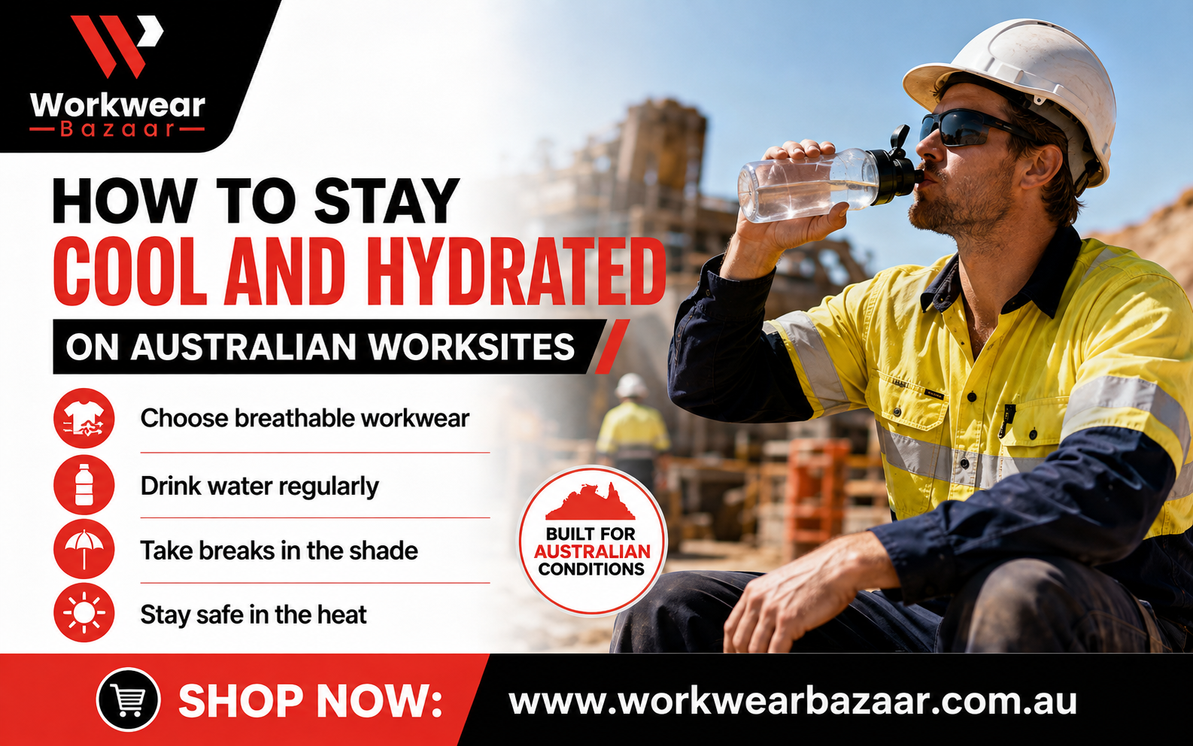
How to Stay Cool and Hydrated on Australian Worksites
Working outdoors in Australia can expose employees to intense heat, strong UV radiation and physically demanding conditions. Construction workers, landscapers, road crews, warehouse employees, tradies and other outdoor professionals often spend long hours in environments where heat can quickly affect comfort, concentration and performance.
Choosing suitable workwear safety clothing is one of the practical steps workers and employers can take to manage hot conditions. Lightweight fabrics, breathable designs and appropriate sun protection can help workers remain more comfortable while still meeting the safety requirements of their job. However, clothing is only one part of staying safe. Regular hydration, scheduled breaks, shade and awareness of heat-related symptoms are equally important.
Why Heat Management Matters on Australian Worksites
Australian worksites can become extremely hot, particularly during summer and in industries where employees work around machinery, concrete, roofing materials or open outdoor areas.
Heat does more than make a worker uncomfortable. When the body struggles to regulate its temperature, concentration and physical performance may decline. Workers may also become tired more quickly, which can make physically demanding tasks harder to complete safely.
Employers and workers should therefore treat heat management as part of everyday workplace preparation rather than something considered only during extreme weather.
A practical heat-management approach may include:
- Wearing lightweight and breathable work clothing
- Drinking water regularly throughout the shift
- Taking breaks in shaded or cooler areas
- Using appropriate sun protection
- Adjusting workloads during hotter periods
- Monitoring workers for signs of heat stress
- Planning demanding tasks for cooler times of the day
Choose Workwear Suitable for Hot Conditions
Not every work garment performs the same way in warm weather. Heavy materials or poorly ventilated clothing can trap heat and make workers uncomfortable, particularly during physically demanding tasks.
Look for Breathable Fabrics
Breathability is important because it allows heat and moisture to move away from the body more effectively.
Depending on workplace requirements, workers may benefit from shirts, polos or trousers made using lightweight fabrics designed for active environments.
Moisture-management fabrics can also help move perspiration away from the skin, helping the wearer feel drier during long shifts.
Consider Lightweight Long-Sleeve Shirts
It may seem logical to wear less clothing during hot weather, but workers exposed to direct sunlight often need protection from UV radiation.
Lightweight long-sleeve work shirts can provide additional coverage without requiring workers to expose their arms to the sun throughout the day.
Look for garments that combine:
- Lightweight construction
- Breathable materials
- Practical ventilation
- Comfortable movement
- Suitable workplace visibility
- Appropriate sun protection
The exact garment should always suit the worker's job and workplace safety requirements.
Understand Hi-Vis Requirements
Many Australian workers need high-visibility clothing because they operate around vehicles, machinery or other moving equipment.
Workers should not simply replace required hi-vis clothing with lighter casual clothing during summer. Instead, they should look for suitable warm-weather versions of the clothing required for their workplace.
Businesses comparing options through specialist workwear clothing stores can consider lightweight hi-vis shirts, polos, trousers, shorts and other garments designed for different working conditions.
The correct option depends on factors such as the work environment, visibility requirements, weather conditions and company safety procedures.
Drink Water Before You Feel Thirsty
Hydration is one of the most important parts of working safely in hot conditions.
Workers should not wait until they feel extremely thirsty before drinking water. Physical activity combined with high temperatures can increase fluid loss through sweating, so regular access to drinking water is important throughout the shift.
Build Hydration Into the Workday
Rather than relying on workers to remember to drink occasionally, workplaces can make hydration part of normal routines.
Practical approaches may include:
- Keeping drinking water easily accessible
- Encouraging regular water breaks
- Providing refill points where practical
- Carrying suitable water bottles on mobile worksites
- Reminding workers to hydrate before physically demanding tasks
- Increasing awareness during particularly hot weather
Workers should also consider that hydration needs may vary depending on temperature, workload, clothing and individual circumstances.
Schedule Breaks During Hot Weather
Breaks become particularly important when workers are completing strenuous tasks in direct sunlight.
Where workplace operations allow, physically demanding activities can be scheduled earlier in the morning or during cooler periods.
Workers may also benefit from resting in areas that provide:
- Shade from direct sunlight
- Air movement or ventilation
- Access to drinking water
- Seating where practical
- Distance from hot machinery or surfaces
Short, well-planned recovery periods can help workers manage heat more effectively throughout a long shift.
Protect Workers From Direct Sun Exposure
Australian outdoor workers frequently experience prolonged sun exposure, so workwear should be considered alongside other forms of sun protection.
Depending on the job, workers may need suitable hats, helmets, protective eyewear and other PPE.
A broad-brimmed hat may be appropriate in some environments, while workers on construction sites may need workplace-approved head protection instead. Safety requirements should always come before convenience.
Sunscreen may also form part of a broader sun-protection routine, particularly for exposed areas of skin.
Choose Work Pants and Shorts Carefully
Shorts may feel cooler, but they are not appropriate for every workplace.
Long work pants can provide additional protection against sun exposure, dirt, abrasions and workplace hazards. Lightweight work pants designed for warmer conditions can provide a useful balance between coverage and comfort.
Before choosing between shorts and trousers, consider:
Workplace Hazards
Workers dealing with sharp materials, sparks, chemicals or rough surfaces may need additional leg coverage.
Company Requirements
Some workplaces require long trousers regardless of weather conditions.
Sun Exposure
Workers spending several hours outdoors may benefit from additional skin coverage.
Movement and Comfort
Stretch panels, practical cuts and lightweight fabrics can make long trousers more comfortable during active work.
Wear the Right Footwear
Work boots are another important consideration during hot weather.
Workers may be tempted to prioritise ventilation, but footwear must still provide the protection required for the job.
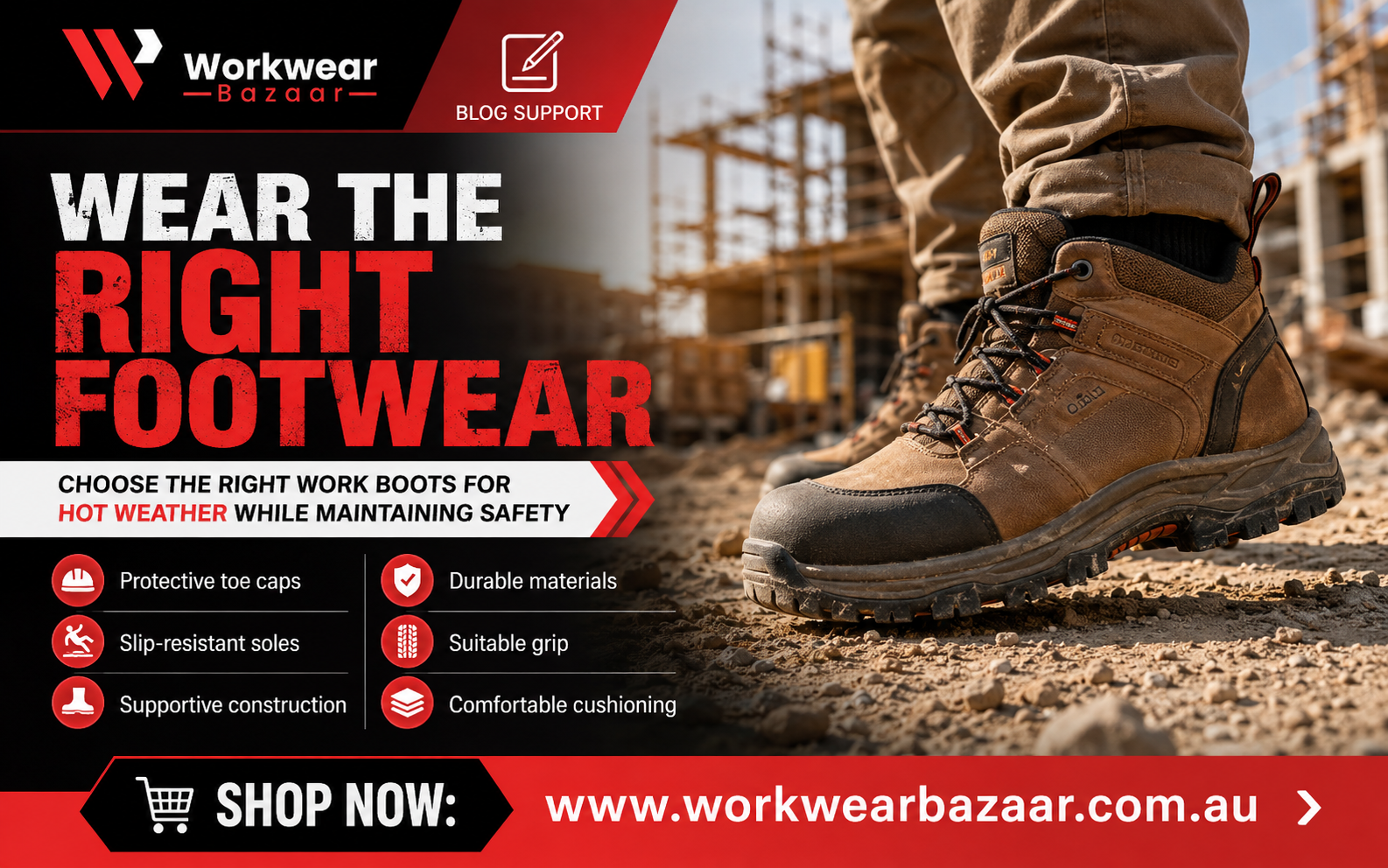
Depending on workplace hazards, suitable safety footwear may need features such as:
- Protective toe caps
- Slip-resistant soles
- Supportive construction
- Durable materials
- Suitable grip
- Comfortable cushioning
Wearing moisture-managing work socks can also improve comfort during long shifts.
Recognise the Warning Signs of Heat Stress
Workers and supervisors should be alert to changes in how someone feels or behaves during very hot conditions.
Possible signs that a worker is struggling with heat can include unusual fatigue, dizziness, weakness, headache, excessive sweating or difficulty concentrating.
Symptoms should not be ignored simply because a worker wants to finish a task. Workplace procedures should be followed whenever someone appears unwell or unable to continue working safely.
Education is particularly useful for teams because workers can look out for one another during demanding conditions.
Create a Summer Workwear Plan
Businesses can prepare for warmer months before temperatures rise.
Reviewing uniforms and PPE ahead of summer gives employers time to identify garments that may be too heavy, damaged or unsuitable for current working conditions.
A summer workwear review might consider:
- Whether shirts are breathable
- Whether workers have enough uniform changes
- Whether hi-vis garments remain visible and serviceable
- Whether lighter work pants are available
- Whether sun-protective options are suitable
- Whether workers have appropriate hats and PPE
- Whether footwear remains safe and comfortable
Ordering ahead can also reduce the pressure of replacing clothing during sudden periods of hot weather.
Why Choose a Workwear Bazaar?
Workwear Bazaar helps Australian businesses, teams and individual workers find practical clothing, uniforms, footwear and safety products for a wide range of industries. Rather than sourcing essential items from multiple suppliers, customers can explore workwear suitable for different roles, seasons and workplace requirements in one convenient location. The range includes options for construction, trade, corporate, healthcare, hospitality and other professional environments, making it easier to build a complete work wardrobe.
Businesses and workers looking for workwear online Australia can compare practical options according to their working environment and seasonal needs. Choosing appropriate clothing before the hottest months arrive can help teams remain more comfortable, organised and prepared throughout summer.
Stay Prepared for Hot Australian Workdays
Staying cool on an Australian worksite requires more than simply wearing a short-sleeve shirt. Workers need a combination of suitable clothing, regular hydration, sun protection, planned breaks and awareness of changing conditions.
By preparing early and choosing workwear that balances protection, comfort and workplace requirements, businesses can help their teams manage demanding summer conditions more effectively while remaining ready for the work ahead.
Recent Posts
-
How to Stay Cool and Hydrated on Australian Worksites
Working outdoors in Australia can expose employees to intense heat, strong UV radiation and physical …18th Aug 2026 -
Logo Embroidery and Printing Services for Australian Teams
A well-presented uniform helps employees look professional while giving customers a clear and consis …28th Jul 2026 -
Why Bright Workwear Matters on Every Worksite
Every busy worksite depends on clear communication, safe movement, and fast visibility. Whether a te …19th Jun 2026